
Four fronts, one aim: doing it without you.
Making sense of sensation
Helping a nervous system take in sound, light, touch and movement and turn it into something usable, and helping you see the line running from a sensory trigger to the behavior you have been struggling to explain.
Hands and body
Small-muscle control for pencils, buttons and zips; eye-and-hand coordination; and the strength, balance and body awareness that playgrounds, PE and eventually jobs all demand.
Looking after themselves
Getting dressed, eating, washing, moving safely through a shop or a school corridor, plus positioning and muscle tone where those are part of the picture.
Staying regulated
Noticing what state their body is in and having something to do about it before it turns into a meltdown, then coping with the ones that happen anyway.
A sensory problem in disguise looks exactly like a behavior problem.
A child who bolts from the cafeteria, refuses every shirt with a label in it, gags on anything wet, or crashes into the furniture all afternoon is usually not being difficult. Their nervous system is reporting something, and behavior is the only vocabulary they have for it.
Our OTs are in the same building as the ABA team and write in the same chart, so a sensory finding turns into a concrete change in that afternoon's session (a different chair, movement before a hard task, a new texture in the eating program) instead of a recommendation nobody acts on.
Ages: up to 18 years
Format: individual sessions, in center
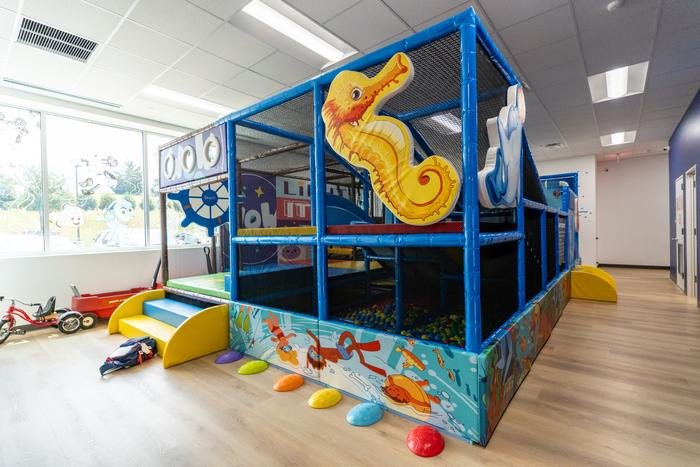
On site: sensory room and equipment
Common goals: handwriting, dressing, eating, hygiene, balance, regulation
OT has its own approval
Occupational therapy is named in the Texas autism statute for many plans, usually with a visit cap of its own separate from ABA and speech. We check all three in one go.
See how coverage works