
Autism therapy in McKinney, without the guesswork.
Every service under one roof on West University Drive, and a team that will tell you in plain English what your insurance covers, what your family will pay, and how long each step takes.
No referral needed to call. If we are not the right fit for your child, we will tell you that too.
McKinney, Texas 75071
Fax (972) 540-2295
In-home sessions Mon–Thu, 4:30–6:30pm
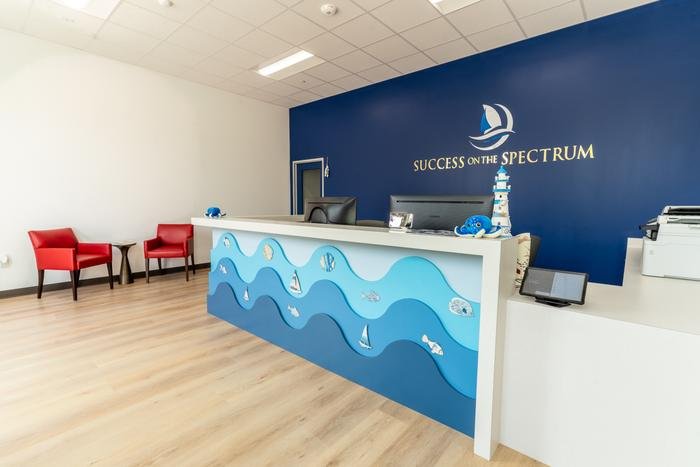
Built for the purpose.
Staterooms for one-to-one work, a mock classroom, an art room, a lunch room, an indoor playground with a ball pit, and a viewing room where you can sit and watch your child's session whenever you like.
Come and see it before you decide anything. Bring your child. Watching how a team greets a child they have never met tells you more than any website can.
Take the tourOne team, one building, one plan for your child.
Plenty of families end up stitching together an ABA clinic, a speech provider, an OT and a social group across three towns and four schedules. Here they sit in the same hallway, share one chart, and write goals into the same plan.
ABA Therapy
The backbone. A behavior analyst maps where your child actually is, writes goals in the order they need learning, and a technician teaches them one-to-one through play: here, at your house, or in their classroom.
Explore ABA →Speech Therapy
For children who talk and children who don't yet. Articulation, language, comprehension, sign and gesture, picture and device-based communication (AAC), and feeding or swallowing support.
Explore speech →Occupational Therapy
Making sense of sensation, controlling small muscles and large ones, handwriting, balance, and the self-care that decides whether mornings are survivable: dressing, eating, washing.
Explore OT →Social Skills Classes
Weekly after-school groups for verbal kids, K through 8th grade, split into four age bands. Turn-taking and friendship for the little ones; criticism, bullying and independence for the tweens.
Explore groups →Autism Diagnosis
Don't have a diagnosis yet? You don't need one to call us. Success On The Spectrum works with NeuroClarity, a virtual practice evaluating from 18 months through adulthood, and the signed DSM-5 report comes back within days.
Explore evaluation →Parent & Caregiver Training
Required here, not optional. Every week we coach parents, grandparents, siblings and sitters in the same strategies the therapists use, because the hours your child spends with you are the ones that decide whether any of this holds.
Explore training →From your first phone call to your child's first day.
Nobody hands you a map for this. Here is ours, the whole route, with honest timelines. Most of the waiting is insurance, and most of that we do for you.
You call, or send the form
Tell us your child's age, what you're seeing, and who your insurance is with. That's enough to start.
We verify your benefits, free
We call your plan and come back with your deductible, copay or coinsurance, visit limits, and whether a referral is required. In writing.
Diagnosis, if you don't have one
An ASD diagnosis from a qualifying provider is what unlocks ABA funding. If you need one, we point you to it.
BCBA assessment
A behavior analyst maps your child's current skills, sits down with you about what matters most at home, and writes the treatment plan from both.
Free benefits check
Send us your child's details and your insurance card information. We'll come back with what your plan actually covers, no obligation, no cost.
Open the form Or call (972) 442-9971You can watch. Any day. Without asking.
The single most common thing parents tell us about their last provider is that they never saw what happened behind the door. Open parent viewing is a Success On The Spectrum network standard, and it is one of the reasons this center is part of it.
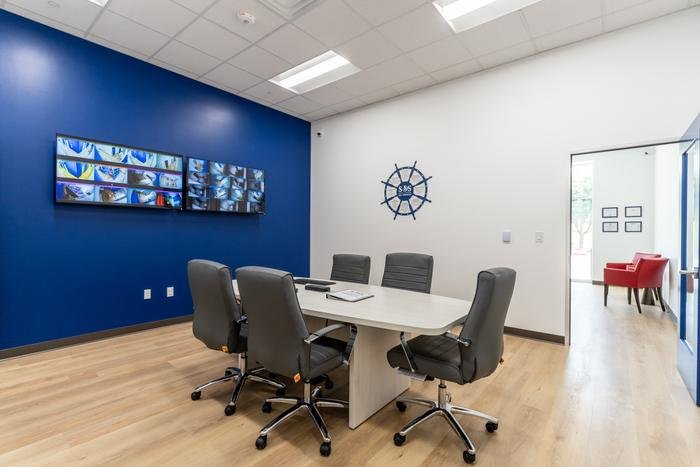
Parent viewing rooms
A room set aside so you can sit and watch your child work with their therapist. No appointment, no designated observation day, no asking permission first.
Video surveillance throughout
Cameras run throughout the building. That protects your child, and it protects the people who work here.
Parent training is required
A condition of enrollment, not a service you can decline. We coach whoever is with your child when it gets hard, so progress survives Tuesday night at home. How it works →
Your child's chart, on your phone
Your own login to CentralReach, the secure system your child's records live in: read their progress data, message the team without phone tag, and see and pay your invoices.
Weekly BCBA supervision
A Board Certified Behavior Analyst oversees your child's program every week. Not monthly, not when something goes wrong.
Purpose-built rooms
A sensory room, private staterooms, a social room, a mock classroom, a playroom and an art room, each built for a different kind of learning. Take the tour →
Children learn beside peers at their own level.
Children are placed into skill-based crews from their assessment results, not their birthday. The bands come from the VB-MAPP, the language and learning assessment the BCBA scores, so a seven-year-old and a four-year-old with the same communication skills belong in the same room. What the VB-MAPP measures →
Substantial support · VB-MAPP level 1 · 0–18 month skills
Foundations. Communication requests, following simple instructions, tolerating routines, early play. Self-calming strategies where behavior is the biggest barrier.
Support required · VB-MAPP level 2 · 18–30 month skills
Expanding language, imitation, matching and sorting, waiting and turn-taking, and the first real daily-living targets, potty training and food programs.
Limited support · VB-MAPP level 3 · 30–48 month skills
Conversation, group instruction, independence in self-care, play with peers rather than beside them, and tolerating change to a routine.
Advanced learners · mastered out of the VB-MAPP
Mock classroom work, community outings, safety skills, self-advocacy and the compliance and social skills that transfer into a mainstream classroom.
“I think something's going on, but I don't want to overreact.”
You are not overreacting. Autism is a difference in how a brain develops, it usually shows up as milestones arriving late or out of order, and the research is unambiguous on one point: intervening early and intensively changes how things turn out.
A diagnosis is not a verdict on who your child will become. It is the key that unlocks funded therapy, school support, and a plan. Waiting to see whether they grow out of it costs the one thing that matters most, time.
By 12 months
No babbling, pointing, or waving. Doesn't respond to their name.
By 18 months
No single words. Doesn't bring you things to show you. Little pretend play.
By 24 months
No two-word phrases. Loses skills they previously had. Limited eye contact.
Any age
Insistence on sameness, repetitive movements, intense fixated interests, strong over- or under-reaction to sound, texture or light.
No diagnosis? Start anyway.
You do not need a diagnosis to call us, and you do not need one to ask questions. If an evaluation is the next step, the network's partner practice can see you virtually, from 18 months through adulthood.
How evaluation worksThe guides we wish someone had handed us.
Written for Collin County families and given away. Use them even if you never call us, the point is that fewer parents lose six months to not knowing how the system works.
Insurance & Funding
Texas coverage law and the self-funded exception that catches most families, cost terms in plain English, Medicaid and TRICARE, how to appeal a denial, and the ten questions to ask your insurer.
Read the guide →School Support: IEP & ARD
The Texas evaluation clock (15 school days, 45 school days, 30 calendar days) a copy-and-paste letter to start it, and how to walk into an ARD meeting prepared.
Read the guide →Ages & Early Intervention
If your child is under three there is a state programme that costs most families little or nothing and needs no diagnosis to start. Plus what tends to matter most at every age up to 18.
Read the guide →Glossary & Questions to Ask
Every acronym translated (BCBA, RBT, FBA, ARD, CPT units, prior auth) and a printable set of questions to put to any provider you are considering, including us.
Read the guide →Let's find out what your plan covers.
It takes five minutes to ask and one to three business days for us to answer. There is no cost and no commitment.