
A method, not a curriculum.
Applied Behavior Analysis studies how people learn and what makes behavior change. Day to day that means taking something your child cannot do yet: asking for a drink, staying at the table, tolerating a haircut, joining a game in the driveway, and cutting it into steps small enough that they succeed at the first one. We teach those steps in play, reward what works, then thin the reward out until the skill holds on its own.
Researchers have been testing this since the 1970s, and the weight of that evidence is why ABA is central to autism treatment and why health plans pay for it. It is not the only thing that helps your child. It is the thing with the most evidence behind it, and the thing your insurance will fund.
Assessment first. Always.
Milestone assessment
A BCBA works out where your child is right now across language, play, social behavior, self-care and early academics, not where a birthday says they ought to be. You get interviewed too, because you know things no assessment picks up.
Your child's individual plan
Goals with numbers attached, in a sensible teaching order, with a recommended weekly hour count. You read it before anything starts, and you can argue with any goal that doesn't match what your family actually needs.
One-to-one with an RBT
A Registered Behavior Technician works through the plan with your child alone. Skills get taught inside play, and behavior shifts because something better is on offer, not because something unpleasant follows.
Supervision and course correction
Your BCBA oversees the program every week, reads the data, retires goals that are mastered and rewrites the ones that have stalled. A goal that hasn't moved in a month is a problem with our teaching, not with your child.
Making it stick everywhere else
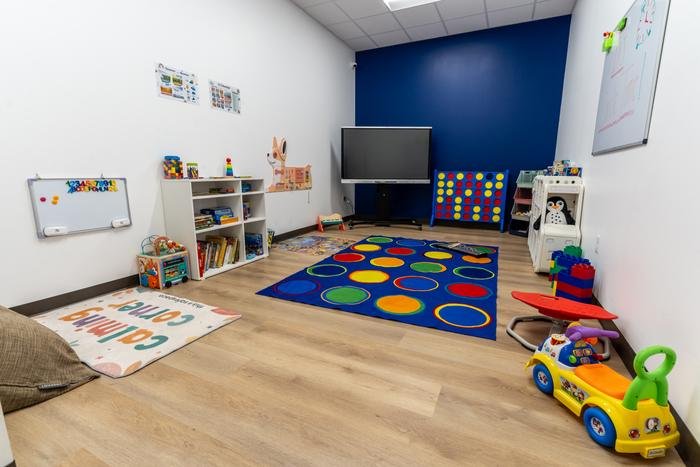
A skill that only appears in a quiet therapy room isn't a skill yet. We move it into the playroom, the mock classroom, the shops and your kitchen, then reduce the support until nobody is prompting it at all.
Goals depend entirely on where your child starts.
Early learners
Communication comes first (asking for things, naming things, turning around when their name is called) alongside enough cooperation with simple instructions to make everything else teachable.
Daily living
Toilet training and eating programs are two of the most requested goals we run, and the two that change a household fastest when they finally land.
Advanced learners
Following group instructions, doing things without an adult attached, and reading a social situation, the cluster that decides whether a mainstream classroom works out.
Behavioral challenges
Ways to settle a body that has gone past the point of listening. We work out what the behavior is achieving, teach something that achieves it faster, then build tolerance from there.
How much therapy does a child actually need?
The honest answer is that it depends, and anyone who quotes you a number before meeting your child is selling a package. Programs here range from a handful of focused hours a week to a full weekday schedule. Younger children with broad delays generally get recommended more hours; an older child working on a narrow set of goals generally gets fewer.
Two other things set the number. Your insurance authorizes a specific amount, and your family has a life: siblings, school, jobs, a drive across Collin County in traffic. A plan you cannot sustain is worth less than a smaller one you can. We would rather build the schedule you will actually keep.
You are in this program too.
Caregiver training is a condition of enrollment here, not a service we offer if you ask nicely. Your BCBA meets with you regularly to walk through how the plan was built and how it is run, and we teach the same strategies to parents, grandparents, siblings and babysitters, whoever is in the room when it gets hard.
You also get your own CentralReach login, the secure system your child's records live in: progress data, secure messages to their team, and invoices you can view and pay. And the parent viewing room is open whenever you want to sit in it. More on how training works →
Ages: up to 18 years
Ratio: 1 technician to 1 child
Center hours: Mon–Fri 8:00am–5:00pm
In-home: Mon–Thu 4:30–6:30pm
Calendar: year-round, no summer break, 10 holiday closures
Staff: CPR and Safety-Care certified, in training every week
Will insurance pay for this?
Usually. ABA is named in the Texas autism coverage statute for many plans, and Texas Medicaid covers it for children with prior authorization. What it costs you depends on your specific plan.
Read the insurance guideAsk us how many hours your child would need.
The number comes from assessment data, not from a package we are trying to sell. Start with a conversation.