
Inside the McKinney center.
This center was built for the purpose rather than converted from office space. Each room does a different job, because a skill learned in one setting has to survive being moved to another.
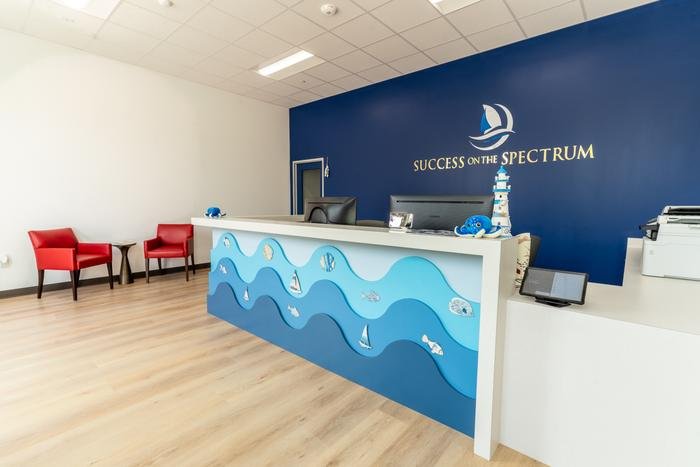
Every room does a different job.
A skill learned in one place has to survive being moved to another, so the building is laid out as a sequence: teach it somewhere quiet, then practise it somewhere real.
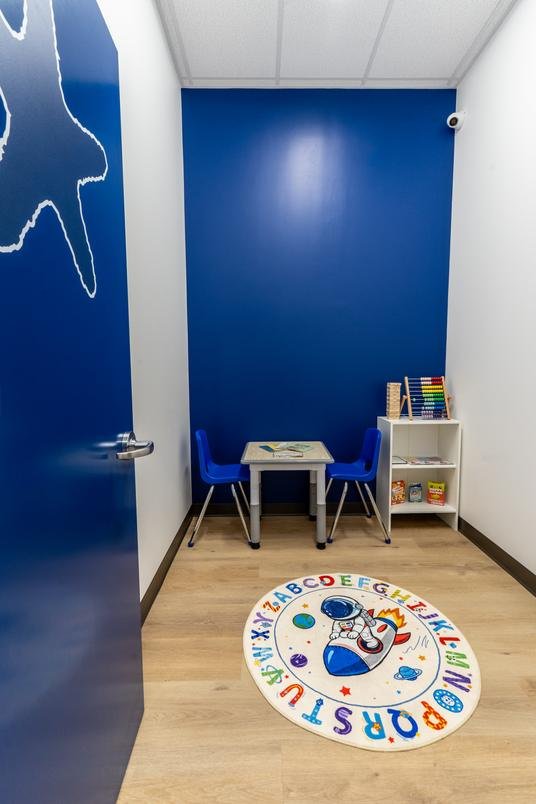
Staterooms
Small, low-distraction rooms for one-to-one work, where a new skill is taught for the first time. One technician, one child, and as few competing demands on attention as possible.
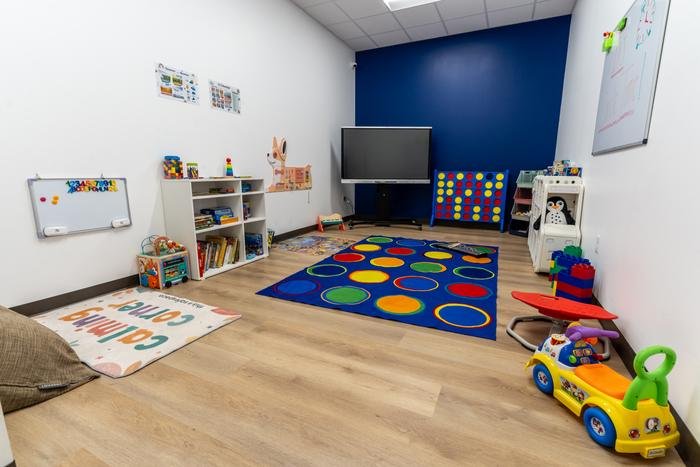
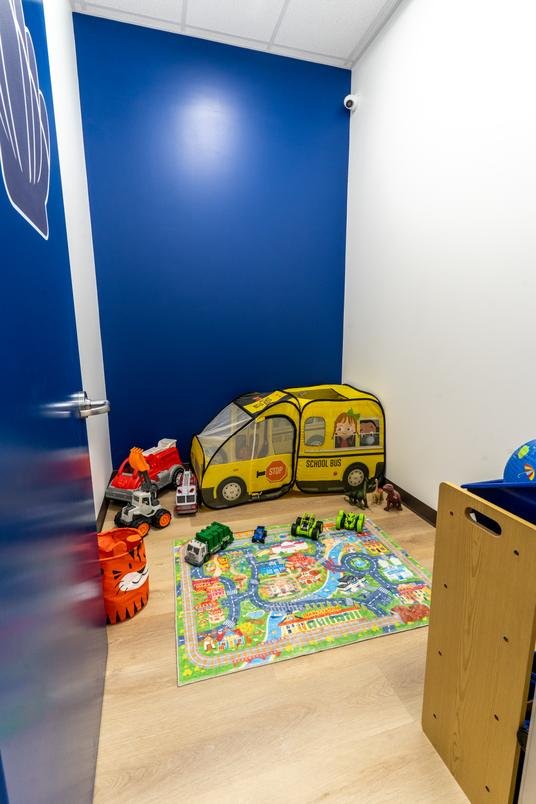
Playroom & circle time
Where a taught skill gets tested against real life: group instruction on the circle rug, turn-taking over a game, and a calming corner in the same room for when it gets to be too much.
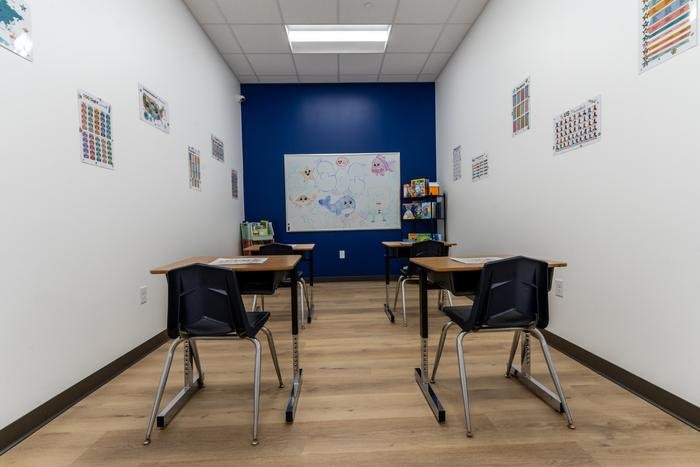
Mock classroom
A rehearsal space for school: sitting at a desk, raising a hand, following an instruction given to everyone rather than to you, and moving on when it's time to move on.
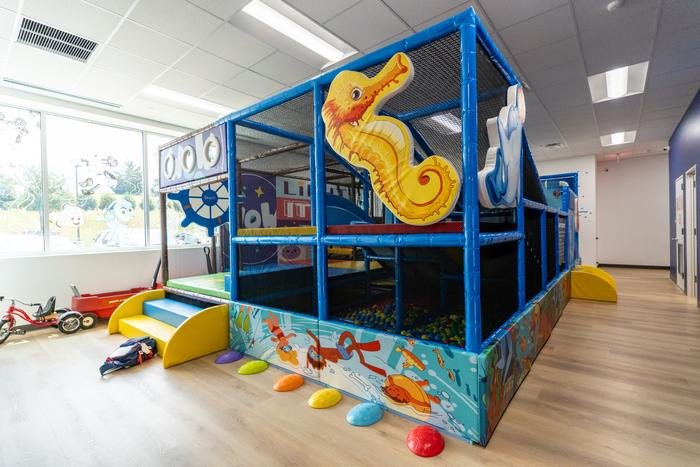
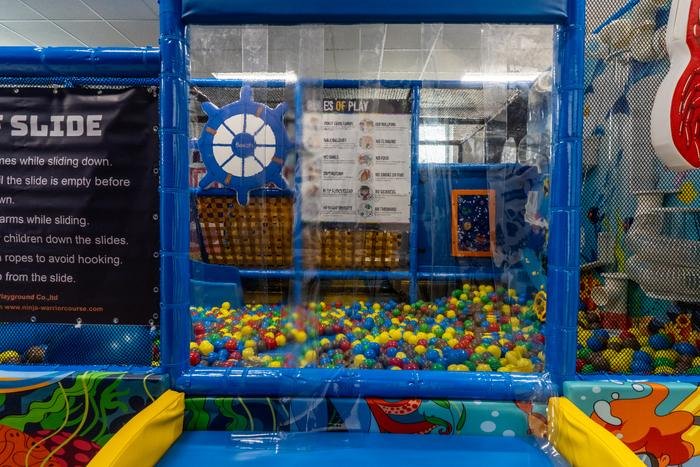
Indoor playground
Two levels of soft play, a slide and a ball pit: climbing, crashing and swinging are how a lot of children regulate, and it is all indoors, so a Texas August doesn't cancel it.
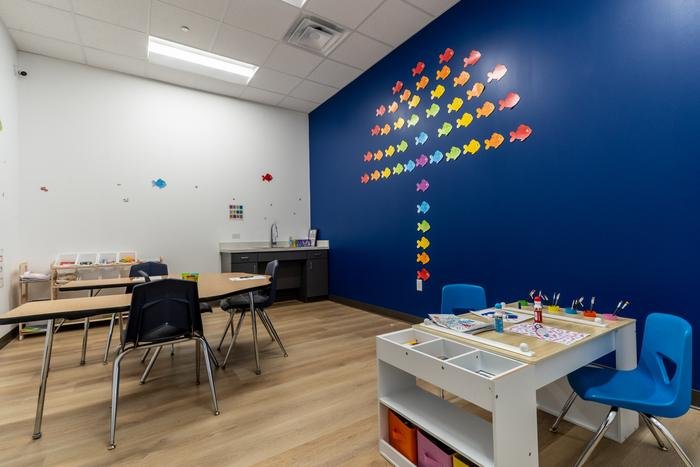
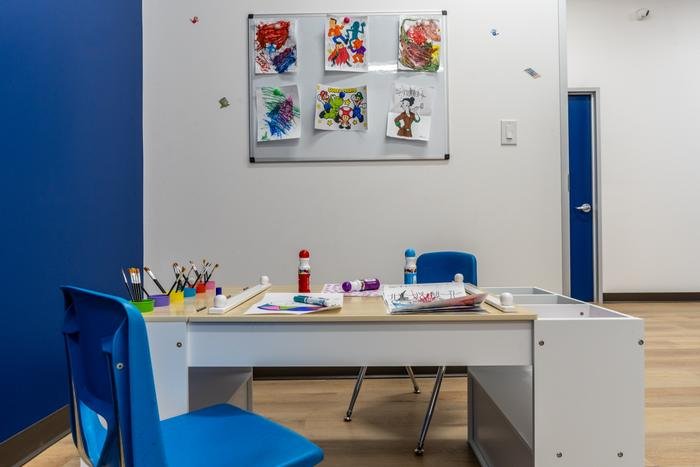
Art room
Fine motor work that doesn't feel like fine motor work, plus mess, texture, and something to take home and put on the fridge.
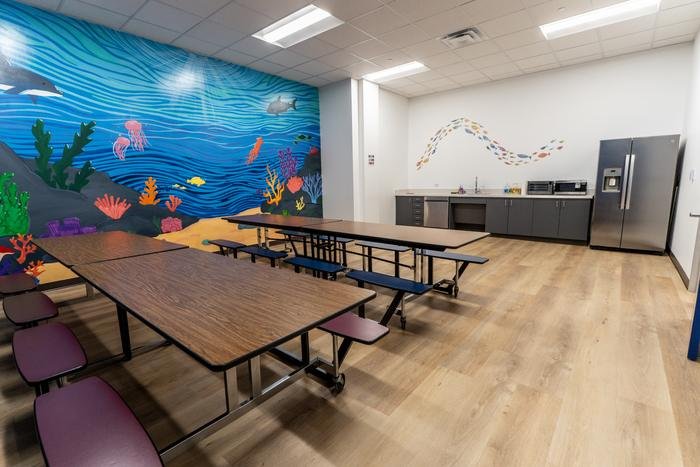
Lunch room
Eating alongside other children at a proper cafeteria table, which for a lot of families is a goal in its own right, not a break between sessions.
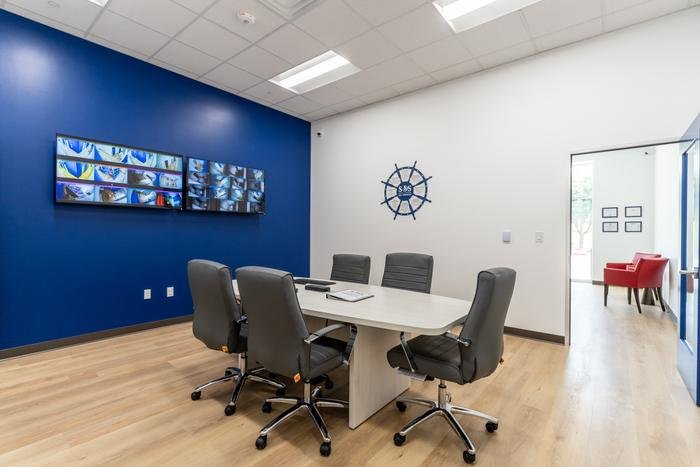
You can watch. Any day. Without asking.
Those screens are live feeds from the therapy rooms. Sit down, watch your child work with their therapist, and leave when you want: no appointment, no designated observation day, no window somebody has to unlock for you. Nine in the morning on a Tuesday is fine.
Ask any provider you are considering whether you could watch a session tomorrow. The answer tells you a great deal.
Book a tourNot all of it happens at a table.
Children alternate between one-to-one lessons and group activities through the day, and the week has things in it that aren't therapy sessions, because a skill that only appears in a stateroom isn't finished.
Music, art and fitness, weekly
Sensory-friendly classes run every week. They are where tolerance for noise, mess, movement and other children gets built, quietly, while everyone is having a good time.
A field trip every quarter
Four times a year we take the children out. Practising a skill somewhere unfamiliar is what turns it into one they actually own, and it is the step most therapy never gets to. Parents are welcome to come; nobody has to.
Lunch, together
At a proper cafeteria table, alongside other children. For a lot of families that is a goal in its own right rather than a break between sessions.
What we do so you don't have to worry about it.
Video and audio
The building is covered by video and audio surveillance throughout. It was designed in from the start, not added after an incident.
Certified staff
Staff working with children here hold CPR certification and Safety-Care training crisis prevention.
Weekly training
The whole team sits down for training every week. Skills do not stay sharp on their own.
Weekly BCBA oversight
A behavior analyst reviews and adjusts each child's program on a weekly cycle.
6601 West University Drive, Suite C
We're on US-380 in McKinney, 75071, an easy drive from Prosper, Celina, Melissa, Anna, Princeton, Frisco and Allen.
Center hours
Monday–Friday
8:00am – 5:00pm
In-home sessions
Monday–Thursday
4:30pm – 6:30pm
Open year-round with no summer break and only 10 holiday closures a year. Social skills groups meet weekly after school. Call to confirm current weekend and before/after care availability.
Come see it
Tours are the fastest way to know whether a place is right for your child. Bring them along, watching how a team greets your child tells you more than any brochure.
Request a tourOn the national site
Official SOS McKinney listing ↗
For the network’s own description of how its centers are set up, the national site is the source.